Session Keynote Lecturers


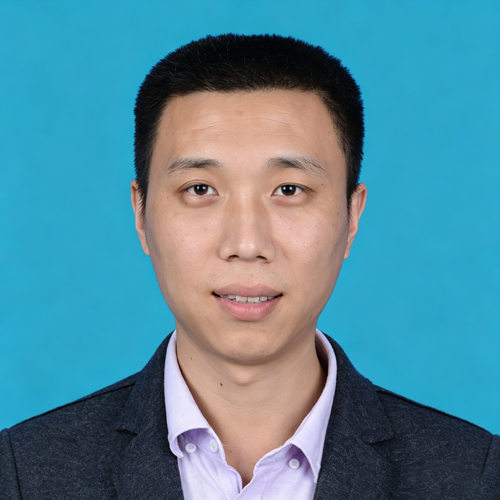
Prof. Anthony James C. Bautista, University of Santo Tomas, Philippines

Biography: Prof. Anthony James C. Bautista, PME, ACPE, MBA, PhD, is a faculty researcher specializing in Agricultural Robotics, Precision Farming, and the Development of Service Robots at the University of Santo Tomas. Notable among his achievements is the creation of the AGROTIS Navigation system, a GPS-guided Autonomous system for Hand Tractor, supported by DOST-PCAARRD, and the deployment system for Unmanned Aerial Vehicles used in water quality monitoring, supported by DOST-PCIEERD. The LISA (Logistic Indoor Service Assistant) Telepresence Robot, a project under DOST-PCHRD, stands out as a significant contribution during the COVID-19 pandemic, leading to Dr. Bautista's recognition with prestigious awards such as the J. Amado Araneta Foundation Living Heroes for Technology and Ginebra Lalaban Ako Awards. Additionally, he received the Gregorio Y. Zara Award for Applied Research from the Philippine Association for the Advancement of Science and Technology and was honored as one of Asia's most outstanding researchers for 2022.

Dr. Bautista is also the founder of Filrobotics Technologies Inc., a startup dedicated to developing robots for various applications. His commitment to advancing robotics technology to address real-world challenges is exemplified by his advocacy, and he was honored with the Community Outreach Award during the 2022 eLearning Forum Asia for his exemplary practices within the eLearning communities in the Philippines.


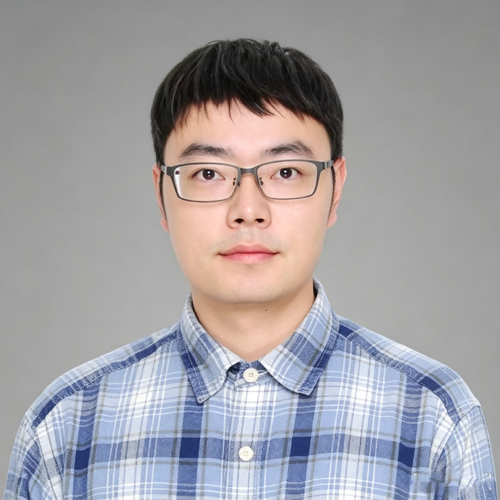
Assoc. Prof. Qingshan Wu, Xi'an Technology and Business College, China

Biography: Qingshan Wu, Associate Professor, a teacher of Xi'an Technology and Business College, representative of the 17th National People's Congress of Xi 'an Gaoling District, special supervisor of Gaoling District Supervision Committee, Special Commissioner of Science and Technology Department of Shaanxi Province, member of IEEE (ICMEE, ICMERR, RAAI) Professional Committee, member of the Expert Database of Undergraduate and Graduate Education dissertation Sampling Review of the Ministry of Education of China. Xi 'an Gaoling District Luyuan Middle School vice principal of science and technology. Main research directions: Mechanical design and theory, 3D CAD/CAM digital design and analysis, mathematical algorithms and agricultural machinery, innovation and entrepreneurship education.
In recent years, He have hosted or participated in 9 provincial and school-level educational reform projects and scientific research fund projects. He have published 16 papers (including 3 papers indexed by EI and Scopus; 1 paper indexed by the prestigious Chinese academic journal), applied for 11 patents and software copyrights. He have guided 11 student projects to apply for the "Student Innovation and Entrepreneurship Training Program of Shaanxi Provincial Education Department," 11 of which were approved at the provincial level and 3 at the national level. He have guided students to participate in national competitions such as the 3D Digital Design Competition, the National Mechanical Innovation Design Competition, and the China "Internet Plus" University Student Innovation and Entrepreneurship Competition, winning over 20 national first, second, and third prizes and over 70 provincial prizes.
He has received numerous honorary titles, including "Outstanding Worker of Shaanxi Education Department" and "Advanced Individual of the Ministry of Education's Graduate Employment Association.", a teacher at the School of Mechanical and Electrical Engineering, is a representative of the 17th People's Congress of Gaoliang District, Xi'an City, a special monitor for the Gaoliang District Supervisory Commission, a science and technology special envoy of the Shaanxi Science and Technology Department, a member of the EI paper review expert panel of the IEEE (ICMEE, ICMERR, RAAI), a member of the Evaluation Expert Panel for Bachelor's and Master's Degree Education Graduation Theses of the Ministry of Education, and the vice principal for science and technology of Luyuan Middle School in Gaoliang District, Xi'an City.
In recent years, he has served as the principal investigator or co-investigator for one key project of Shaanxi Province's educational reform and three provincial research projects, as well as six projects funded by the Gaoliang District President's Research Fund. He has published 16 academic papers, including three papers indexed by EI and Scopus and one paper indexed by CSSCI. He has also filed for nine patents. He has guided 11 students to apply for the Shaanxi Education Department's "College Student Innovation and Entrepreneurship Training Plan Project," with eight projects approved at the provincial level and three at the national level. He has guided students to win more than 20 national first, second, and third prizes in various science and technology competitions, including the 3D Digital Design Competition, the National Mechanical Innovation Design Competition, and the China "Internet Plus" College Student Innovation and Entrepreneurship Competition. They have also won more than 70 provincial prizes.
Wu has received numerous honorary titles, including "Outstanding Worker of Shaanxi Education Department" and "Advanced Individual of the Ministry of Education's Graduate Employment Association."


Assoc. Prof. Taohan Wang, Shanghai Electric Group, China

Speech Title: From Simulation to Deployment: Embodied AI for Precision Industrial Cleaning

Abstract: This presentation examines the process of transferring robotic skills from simulated training environments to real-world deployment on industrial production lines, focusing on the critical task of "characteristic scenario cleaning." By constructing an "Industrial Embodied Skill Training Ground," the research conducts large-scale simulation training for perception-action coordination, enabling robots to acquire complex cleaning skills. The core argument is that this transfer signifies the transformation of industrial cleaning from a repetitive task reliant on manual experience and labor into an intelligent, quantifiable, optimizable, and replicable process. Deployed on production lines, the robotic system utilizes embedded vision and force-control algorithms to achieve consistent and precise handling of microscopic contaminants while generating operational data. The findings indicate that this model not only enhances production line cleanliness stability and product quality but also liberates human experts from labor-intensive tasks, allowing them to focus on process standardization and system optimization, thereby advancing the overall evolution of intelligent manufacturing systems. This study provides a feasible paradigm for the implementation of embodied intelligence in the field of industrial fine manipulation, spanning from virtual training to physical validation.

Biography: Taohan Wang is an Associate Professor at the Central Research Institute of Shanghai Electric Group and the head of its robotics technology team. He holds a PhD from the University of Tokyo and has over a decade of experience in robotics research and engineering. His research focuses on robotic manipulators, soft-body control, mobile robots, and humanoid robotics, with prior research experience at the University of California, Berkeley in autonomous driving and robotics. He has led and contributed to multiple major robotics research projects and is dedicated to advancing intelligent robotics from fundamental research to industrial applications.


Dr. Shumiao Zuo, Beihang University, China

Speech Title: Digital Twin-Driven Fault Diagnosis of Planetary Gear Set

Abstract: Planetary gear sets (PGS) are extensively employed in a wide spectrum of power-transmission applications. Because gear faults significantly deteriorate the reliable service of PGS, real-time health monitoring of gears is imperative. To address this limitation, the present study proposes a digital twin-driven framework for the diagnosis of PGS gears. First, a PGS dynamic model is established for both healthy and faulty gears, and then the corresponding simulation signals can be obtained. Meanwhile, a domain discriminator is designed, enabling a transfer-learning network to align fault-related features from the simulation (source) domain to the real (target) domain. Consequently, the diagnostic model can be trained exclusively on the simulated data generated by the digital twin (PGS dynamic model), yet still deliver accurate fault-type and fault-severity diagnosis for actual measured signals.

Biography: Dr. Shumiao Zuo received his bachelor's degree in 2019 and doctoral degree in 2025, both from Beihang University. He works for Intelligent Transmission Research Center, Beihang University. He has an extensive research background in gear transmission, with significant contributions to dynamic analysis, failure mechanisms, optimization for high-strength, and fault monitoring. His work has resulted in 12 publications in prestigious journals such as *International Journal of Mechanical Sciences*, *Mechanical Systems and Signal Processing*, and *Mechanism and Machine Theory*. He also holds 12 granted patents and has presented his research at five international conferences. His innovative findings have been applied to enhance the performance and reliability of listed models, including Geely's Weirui electric drive system.